
The Innovative Secondary Education for Skills Enhancement (ISESE) Competition blog series features the winners, runners-up and five additional models that have been selected due to their innovation, impact, sustainability and potential for replication in Africa and Asia. This is Part 3 of our 10-part series.
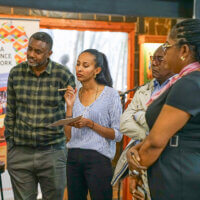
Twenty-five year old Le Thi Le’s (pictured above) legs are partially paralyzed. She could have made a living handcrafting garments with traditional job training. That may have allowed her to be more productive and independent, but it would not lessen society’s stigma that people with disabilities are incapable of higher-paying jobs.
With the help of Catholic Relief Services (CRS), Le is studying at the Hanoi College of Information Technology through CRS’s IT training program for youths with disabilities. The program not only offers information technology training but also provides students with skills on how to conduct a job search, interview and interact in an office.
CRS’s program is one of R4D’s Innovative Secondary Education for Skills Enhancment (ISESE) Competition runner-ups in the Asia region and has been awarded $500 in support of their program. It addresses the lack of employment opportunities for people with disabilities in Vietnam by providing them with advanced technical training, soft-skills training, and networking opportunities. The ISESE jury panel found this model innovative not only in its provision of employable skills to a vulnerable population, but also for its potential to encourage social mobility to a particularly marginalized group.
The success and sustainability of CRS’s program stems from the strong commitment of their university partners and the vested interested of employers whose involvement ensures the relevancy of the training programs. Employer participation increases ownership in the program and facilitates job placement for program graduates. Financial (scholarships) and in-kind (used equiment) support are also provided by employers to help the training program become more sustainable.
CRS’s IT program is an effective approach in giving disadvantaged youth the opportunity for social and economic advancement by providing highly-skilled human capital for Vietnam’s fast-changing economy. Working closely with employers allows the organization to adjust its IT training program to offer students the skills they need to meet market demands. While the goal of the IT training program focuses on teaching students IT skills, it also provide students with the soft-skills they need to assimiliate into the office culture. CRS’s holistic approach ensures that students are given the support they need to begin successful careers from start to finish.
Stay tuned for the rest of our series and check in next week to learn about the runner-up education model for India.
- Part 1: Yuwa – Kicking It New School
- Part 2: Improving the quality and relevance of middle school in Senegal
- Part 3: IT training for youth with disabilities
- Part 4: Multi-Skill Vocational Training and Entrepreneurship Development as Part of Secondary Education
- Part 5: Emusoi Centre
- Part 6: Arts-based Learning for English Language Skills: Local Culture and Place-based Education
- Part 7: Optimizing Secondary Schools for Skills and Livelihoods through PPPs and CSR
- Part 8: Joyful Learning in Non-Government Secondary Schools in Bangladesh: Public Private Partnership
- Part 9: Rural Youth Empowerment Programme
- Part 10: UCEP: A Beacon of Hope
Image Credit: Sean Sprague, Catholic Relief Services
Monica Wong is a summer intern at Results for Development Institute. When she’s not engulfed in her MBA studies at Georgetown University, she enjoys listening to live music on lazy Sundays while doing crossword puzzles.