
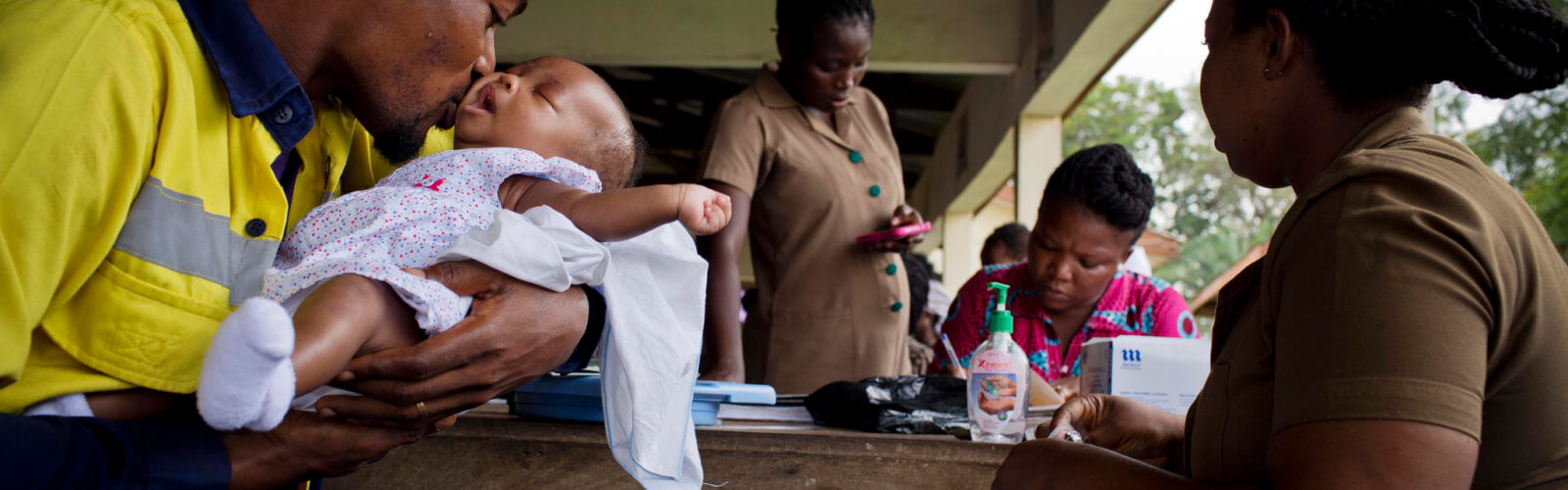
In Ghana, about half of the health services that both rural and urban residents and both the richer and poorer use come from providers in the private sector. The foregoing is one of the important findings from the “Private Health Sector Assessment in Ghana” as the government of Ghana begins to address how to better harness the important role played by private actors to achieve national health goals and objectives. Under the guidance of Ghana’s Ministry of Health and with financing from the World Bank Group, Results for Development teamed with three other international organizations (Bitran y Asociados, CHeSS and ACET) to conduct a broad assessment of the current state of the private role in Ghana’s health sector. At the final workshop that was part of the study process, a group of key stakeholders concerning Ghana’s health sector from the public and private sectors used the study’s findings to formulate concrete, actionable recommendations on how to enhance the contribution of private actors to health.
R4D’s previous work on health systems has identified several key barriers to successfully harnessing the private sector in developing countries:
- Limited data on the role of the private sector in health delivery.
- An inefficient flow of information between funders and entrepreneurs.
- Bias towards public health systems during policy creation and implementation.
- Limited government capacity to engage the private sector.
- An overall lack of funding for the private health sector.
In an effort to address these barriers, the country study team:
- Surveyed 730 providers of health services across seven districts.
- Conducted an assessment of the demand for these same goods and services.
- Identified market failures and constraints.
- Reviewed the existing policy, institutional successes, and regulatory environment.
- Engaged in consensus and ownership building with stakeholders.
As part of our efforts to ensure validation and ownership of the assessment results, engagement workshops were held to: (1) allow stakeholders to guide the study design to ensure that key questions would be answered; (2) learn about, discuss, debate study findings, and (3) finally take decisions on actions based on the study’s findings. The first workshop in July 2009 presented a draft approach to the study and obtained feedback that the study team used to shape the collection of data. The second workshop in December 2009 presented data collected and analyzed by the study to stakeholders to allow the latter to identify gaps, discuss what the findings meant, and begin to formulate recommendations. The final workshop in March 2010 focused on making the recommendations arising specific and setting priorities among them.
Final recommendations of high priority include:
- Establishing task forces comprised of representatives of both the private and public sectors to advise on the implementation of existing policies and improve existing institutions
- Establishing a collected voice for all Ghanaian private sector providers
- Creating avenues of access to credit for private providers
The stakeholders involved in the series of engagements included representatives from the Ministry of Health, Ghana Health Service, National Health Insurance Authority, Parliament, the Ministry of Finance, regulatory bodies, private provider and professional associations, as well as international development partners.